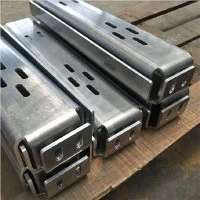
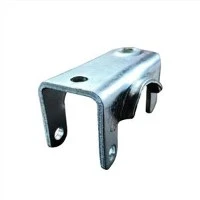
The decision of whether taking roll forming or press braking comes down to what fabrication solution could deliver the desired quality with the lowest overall manufacturing cost, and there are multiple factors to consider. We will share our thoughts with you regarding the pros and cons of metal forming solutions and hope our experience will help you to make the right decision for your next project.

First, let's see what is press braking. Press braking, also called brake forming or press bending, is a metal deformation process that aligns a piece of sheet metal or metal plate along an axis. This is achieved by using a machine pressing tool (press brake) to clamp the metal piece between a punch and a die set for prearranged bending angle. To make a high-quality press braking, a skilled operator would methodically go through a sequence of steps that covers checking, adjusting, and rechecking to ensure everything is setup correctly for the most ideal bend possible. Please always remember that three critical components to consider for achieving accurate bends: press brake, tooling (punching and die) and the material itself.
For material, there are few aspects which need to be considered:
√ Hardness, which is how resistant the metal is to be penetrated, and it's normally measured by the Rockwell scale.
√ Springback effect, normally operators will overbend an angle because the material returns back towards its original shape after bending.
√ Yield Strength, a decisive factor of how much stress it can stand for changing its shape.
√ Ductility, it often means elongation, and it measures the capability of the metal to be stretched without breaking.
√ Thickness, the metal thickness will react differently to the bending pressure.
√ Grain direction.
For the press brake machine, the experienced operator will also consider the following aspects.
√ Tonnage, calculate the correct tonnage needed for your bending specification. the bend you are trying to achieve, the length and thickness of the
workpiece, the inside radius of the formed part, the V-die opening, and the minimum amount of flange on the finished part.
√ Bend sequence, make sure that the bending sequence gives you the best quality with minimum defect ratio.
√ Bending solution, you need to know which one to choose from air bending, bottoming, or coining, determine the most suitable bending method according
to your client's requirement.
√ Y-axis, aiming the exact same spot with each cycle.
√ Calibration, just like calibrating your inspection tools, and you need to verify that your brake is calibrated properly on the regular basis. If there is big project
that requires high accuracy, you need to recalibrate it even if you have just done it not too long ago.
The last important element of press braking is the tooling, and your operator needs to consider the following factors:
√ Seating, the operator needs to make sure that the press forming tooling is properly to positioned to ensure a correct bend. Usually, hydraulic clamping is
recommended.
√ Positioning, in practical most bending is performed in the center of the press brake ram, but you might consider setting up several different sets of tooling at
once for stage bending if that does not impact upon your bending result in a negative way.
√ Tooling selection, the operator needs to make sure that the upper tooling and bottom dies needs to handle the tonnage you've calculated for the
operation.
√ Compatibility, if you have CNC press brake, always remember to feed it with accurate dimensions of the punch and die for consistent programmable
operation.
Brake forming is one of the oldest mechanical deformation solutions, and it can produce a lot of different shapes, and the advantages of press braking are:
√ Ideal for low- to medium-volume orders, especially for smaller and shorter components.
√ Relatively low tooling cost compared with roll forming.
√ Ideal for high-mix, low-volume projects.
√ Simple to set up and operate than roll forming.
√ Cost-effective, and it is capable of bending metal at almost any orientation or position; its
limitation being that there must be ample room for the metal being bent to fit inside and around
the press brake.
√ Capability of forming wide different shapes.
√ Short cycle time.
√ Suitable for wide different metal material like aluminum, stainless steel, copper, CRC, HRC
√ Cost of press braking machine is usually lower than roll forming machine.
√ Requires less space than roll forming machine.

The disadvantages of press bending are:
√ Limit to the length of the bend, and usually the maximum length will be under 6,000mm. The most common length is below 3,000mm
√ Not suitable for high volume, unless robotic press bending equipment is invested. An automated press brake bending cell like the one we described is quite
expensive. Plus, it needs engineering support to program new projects. Offline programming is feasible, but robot programs usually need some on-machine
touch up.
√ Can't produce complex shapes because the brake dies aren't made for complex forming.
√ Can't make long workpiece, which is longer than 6,000mm.
√ Press braking requires separate fabrication processes for punching, notching, or perforating, which requires time, labor, and expense.
In short, the press brake is flexible and very versatile, and it has a limit to the sheet size and length of bending. In contrast, roll forming works on long lengths of coiled material, and the formed pieces then need be cut into desired length. With above explained pros and cons about press braking, you might have a clearer idea about this metal forming process. Now, let's take a look at the process of roll forming, and what's the advantage and disadvantages of roll forming?
Roll forming is a reliable metal forming solution which uses a continuous bending operation where long metal strips, typically coiled steel, are passed through consecutive sets of rolls at room temperature. The speed of roll forming varies from few meters to over a hundred meter per minute and therefore it can really achieve very high production efficiency.
Advantage of Roll Forming
√ Multi production solution, and it incorporates secondary operations such as punching and notching in-line, the ability to form complex shapes that can't be
press bent.,
√ Produce extra-long metal profiles that can't be produced by brake press.
√ Capable of producing different lengths
√ High efficiency, it can produce tight tolerance with relatively high speed.
√ Lower labor demand.
√ Less tooling wear, roll forming doesn't create tool wear that press brake does.
√ Better dimensional control, due to the nature of roll forming itself, it tends to produce consistent dimension than other means of metal forming processes.

Because of these benefits, roll forming is widely used in wide industrial applications like door window, gutters and housing siding, drawer slides, steel supporting frame, metal tubing, guardrails, posts for fencing, railing systems and solar energy. As you can see, roll forming is a kind of metal forming process driven by volume, and therefore it's only suitable for relatively bigger quantity project. Small orders are more expensive compared to brake forming due to tooling cost and other operation cost like tooling set up and tooling test run. Below is the summery of disadvantages of roll forming.
√ More expensive to produce compared to brake forming for small orders
√ Tooling is more expensive
√ The cost of equipment itself is usually higher than press brake
√ Requires bigger space
√ Tooling set up need to be done by an experienced operator, and tooling setup takes longer time
than press bending
√ More likely to produce end flare than brake forming due to linear stress
Fabmann can supply both simple and complex metal profiles made by press brakes and roll forming equipment, and we are using primarily stainless steel (304 and 316, 316L), CRC, HRC (Q235 equivalent to S235 or Q355 equivalent to S355), pre-galvanized coil like DX51D Z275, Z300 up to Z600 (single size zinc coating is above 42μm) according to EN 10327. We can produce complex steel profiles with holes punched online, and we also provide powder coating or hot dip galvanization according to your project requirement. Furthermore, we also design packing solution to make sure that your metal profiles will be fully protected throughout the whole transportation from China to your warehouse.